Tomorrow will mark the 103 Anniversary of the 1906 Earthquake. I was wondering what happened on the East Bay during that time. Below are some of the things I discovered.
What has happened?
A century ago, San Francisco was California's biggest city, and at five a.m. on Wednesday, April 18, the city was starting to wake up. Then, at 5:12, the earth shifted. History professor and former California State Librarian Kevin Starr says there were two jolts, the second one lasting forty seconds.
There was no panic, no noise. "You have a period of silent shock and awe," Starr says. "And people came out on the street, looked to each other, looked around and said; 'What has happened? What has happened?'"

What had happened was that an earthquake -- today estimated at magnitude 7.9 - violently shook the city. Gas lines broke, 60 fires broke out, and the water system failed. (By Jan Sluizer San Francisco 14 April 2006)
Point Richmond Church Helps 1906 Quack Victims

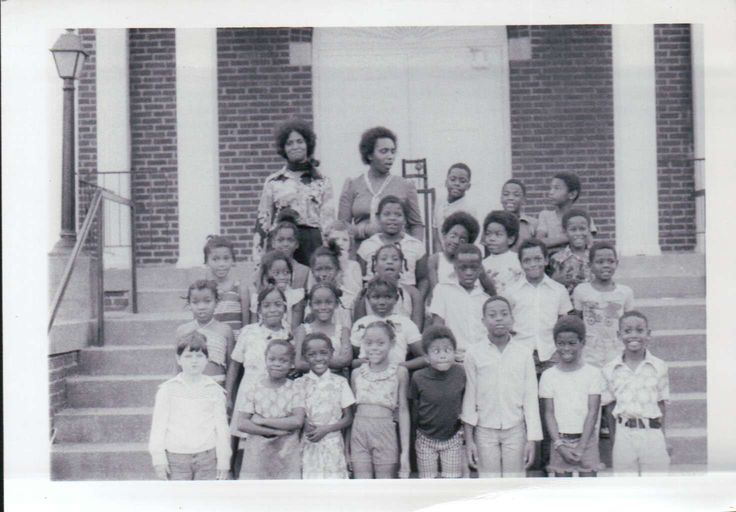
This church just up the hill from historic downtown Point Richmond was completed in 1906, in time to shelter refugees from the San Francisco earthquake. The wood frame building is covered by a veneer of Richmond Common Brick produced nearby at the Richmond Pressed Brick Company, now the site of Brickyard Cove condominiums. It presents a solid and imposing form on the hillside.
Relief Operations Outside of San Francisco
While conditions in San Francisco were so difficult as to demand the most unremitting care and attention, yet the division commander was not unmindful of the destitution that had occurred in adjacent towns and cities and also as to the congested state of adjacent towns from the overflow of destitute refugees from San Francisco. At the earliest possible moment attention was given to these sufferers, which is treated under the heads of Oakland, Alameda, Berkeley, San Jose, Santa Rosa, and Sausalito districts, and relief of the Chinese. The number of destitutes outside of San Francisco was variously estimated at from 75,000 to 90,000, which, with those in the city, made an aggregate certainly exceeding 400,000.
Relief in Berkeley
Benjamin Ide Wheeler

Berkeley was practically uninjured by earthquake, but it became a refuge for a thousand or more destitutes from San Francisco. Through the efficient and timely efforts of the president of the University of California, Benjamin Ide Wheeler, and of Mrs. Wheeler, the relief was ably and satisfactorily handled by a local committee. While the possibility of military supervision was once under consideration, yet at that time neither officers nor men were available. It transpired that the local efforts, so ably directed, were equal to all demands. Berkeley was supplied with relief stores in like manner as Oakland had been, but happily the administrative burden of prompt and suitable distribution
did not devolve upon the army.
Relief in Oakland and Alameda

Frank K. Mott
Oakland fortunately escaped any serious injuries from earthquake, and was spared the calamity of fire. It was, however, filled with refugees from San Francisco, the number in the early days being estimated from 50,000 to 75,000. The situation was promptly taken in hand by an energetic relief committee, of which the Rev. E. E. Baker was chairman. Fifty thousand dollars was allotted Oakland from the funds sent to San Francisco, but I um uninformed as to whether or not additional sums were sent to Governor Pardee and Mayor Mott for specific use in that city. Large quantities of relief supplies were shipped direct to Oakland, and whenever these were deficient in quantity or quality they were promptly supplemented by supplies billed to San Francisco, the diversions being made through Capt. Jesse M. Baker, the efficient quartermaster at Oakland pier, so as to avoid transshipment.
Realizing that the extent and continuance of the relief problem were overtaxing local resources and forces, Governor Pardee and Mayor Mott, in a conference with me, expressed the opinion that the time for military supervision in that city had arrived. There was absolutely not an officer or man who could be spared for that work. Fortunately, Gen. Charles A. Woodruff, retired, an officer of marked ability and intelligence, volunteered his services as civil aid, and served in that capacity in connection with the relief operations of Oakland, Alameda, and Berkeley from May 1 to May 8. He placed himself in communication with Mr. J. P. Edoff, the representative of Mayor Mott, and the Rev. E. E. Baker, chairman of the Oakland relief committee. General Woodruff found many different relief organizations in Oakland, all working independently and without controlling central authority. Noble as were these efforts in spirit and theory, yet their disassociated action had the consequential results of extravagance and waste, not to mention the encouragement of repeaters and impostors. General Woodruff, by tactful methods and personal appeals, succeeded in gradually concentrating the greater part of these organizations.
New York Times Headline, April 20, 1906
ARMY OF HOMELESS FLEEING FROM THE DEVASTATED CITY
________________
Oakland Overrun with Refugees -- Multitudes Unable to Leave.
________________
200,000 WITHOUT SHELTER AND FACING A FAMINE
Police Seize Groceries and Bakeries -- Mayor Appeals for Food and Tents -- All Possible Efforts Made to Open Railways and Give Relief to Sufferers.
The 1906 disaster marked the birth of earthquake science in America
Andrew Lawson

The 1906 disaster marked the birth of earthquake science in America. Even as the fires raged for three days, California's governor rounded up 20 of the state's leading scientists. They were challenged to investigate how and why the earth's crust had ruptured with such terrifying violence.
Ross Stein, a geophysicist with the United States Geological Survey says that four years later they produced the Lawson Report, which laid the foundation for much of what is known today about earthquakes.
"Before the 1906 earthquake most scientists thought that an earthquake involved shaking of the ground but not any permanent displacements of the ground," Stein says. "What the Lawson report did was to show us that sudden movement along a fault, a zone of weakness in the earth, produces the earthquake shaking. In addition to producing the shaking, which is what we all feel, it produces permanent displacement of the land."
Richmond Houses an Earthquake Laboratory
The Laboratory and NISEE Library Facilities are located at the Richmond Field Station, 1301 S. 46th Street, Richmond, California 94804-4698

The Laboratory and NISEE Library Facilities is the place to find out how buildings and bridges respond to earthquakes.
They have an equipment site of the George E. Brown, Jr. Network for Earthquake Engineering Simulation (NEES). Their specialty is modeling large-scale structural systems and experimental evaluation of their response to earthquakes. They continue the long Berkeley tradition of pioneering new experimental and numerical modeling and evaluation methods. At nees@berkeley, you can certainly do conventional tests using our configurable reaction wall facility and a versatile array of actuators. However, they are very proud to have developed new hybrid simulation methods that combine physical and analytical sub-structures into a hybrid model of the entire structure using our state-of-the-art digital controllers and networks, the OpenFresco interface framework, and the latest finite element models built using the OpenSees analysis framework.
http://nees.berkeley.ed/ is a place of discovery. Here, you can see how earthquakes can affect structures. They have many videos of experimental testing on hand and several laboratory demonstrations ready to run for middle- and high-school students. They also run research experience sessions during the summer. They also run research experience sessions during the summer.
Richmond Emergency Action Community Teams (R.E.A.C.T.)

The Program: REACT/CERT was implemented, and is maintained under the leadership of the City of Richmond Fire Department Office of Emergency Services. CERT (Community Emergency Response Team) is the federally and nationally most recognized name for REACT. REACT/CERT students are trained by the Richmond Fire Department and certified volunteer community trainers. REACT/CERT students receive 20 hours of free life saving training, plus attend disaster drills yearly. Upon completion of the training and drill, students graduate with a certificate, vest, and a hard hat imprinted with the CERT logo.
The next drill is scheduled for Saturday, April 25, 2009 from 9:00 am - 2:00 p.m..
The Benefits of REACT/CERT
- · A major earthquake, or one of numerous other potential disasters, may occur in the city at any time, causing widespread damage and destruction to homes, highways, and businesses. Past disasters, such as the Loma Prieta earthquake, Northridge earthquake, and the Oakland Hills fire, have proven that in a disaster situation, people want to help. With the proper training they will assist, save lives and property in a safe manner, and be the "first responders on the scene.”
- · A disaster will likely disrupt normal activities. Police, Fire, 9-1-1, and ambulances will be quickly overwhelmed, and may not be able to respond for up to 72 hours. Citizens need to be able to take care of themselves until the professional emergency responders arrive.
- · It is the responsible thing to do. The city alone cannot possibly respond to all. It is important to remember the following: Victims have a 99.3% chance of survival if rescued in the first 30 min. Victims have an 81% chance of survival if rescued in the 1st day. Victims have a 34 % chance of survival if rescued in the 2nd day. Citizens will there wanting to help and it would be best if they were trained to respond and help each other.