Showing posts with label Richmond. Show all posts

Monday, July 6, 2015

The Cracker Lady’s House Roots

The Cracker Lady’s House Roots


The question was asked recently by a Facebook friend, “ What is this cracker lady house stuff all about? I have no idea what the cracker lady house is.”  Well, the origin of the Cracker Lady goes clear back to 1977 and I was in my last year of Bible College in Tennessee.  Most of the time that I lived in Cleveland, Tennessee, I attended a very large white church.  But in my last year of college, I felt the Lord’s leading to go minister in the black church across town. Don’t ask me why He would wanted this country white girl in a black church, I do not know. He had given me a heart for the black people when I first came to Him.  And I had made a promise to him then, “Lord, I will go where you want me to go and I will do what you want me to do.”  and I meant it from the bottom of my heart.  I was a ministry student, but in such a large congregation, I didn’t have much opportunity to operate in my calling, so the Lord did not get much argument from me.
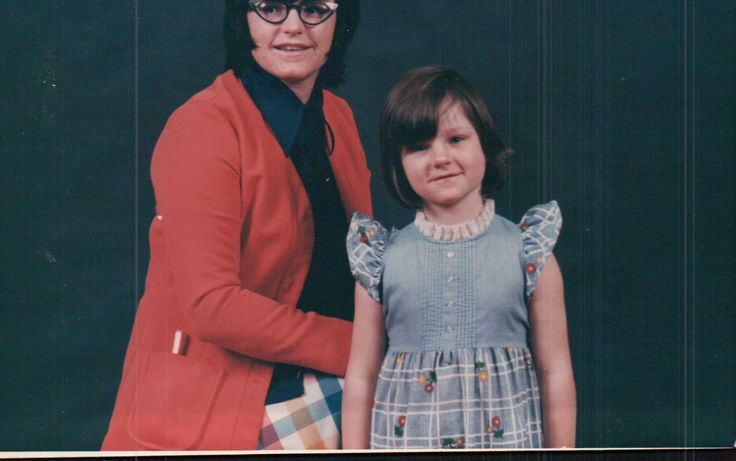

Shannon & me at Bible College 1976
(we both needed a haircut)


So off I went to the black church.  Shannon, my daughter, and I were the only white people in the church at the time.  I taught Sunday School to teens and conducted a Vacation Bible school.  I learned a lot and enjoyed the black gospel worship.
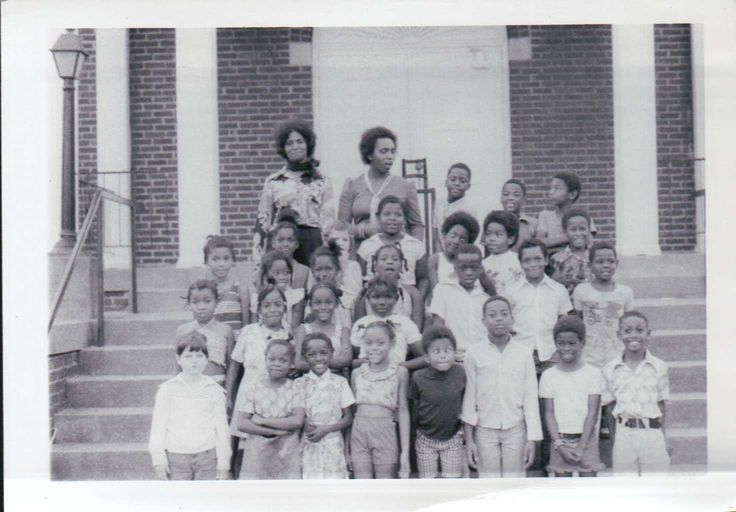

Shannon (first row, first on left) with a VBS class 1977


In preparation for ministering to Southern blacks, this lily white ignorant Western girl read everything she could on Black history and culture, hoping I could glean enough insight to be a blessing.
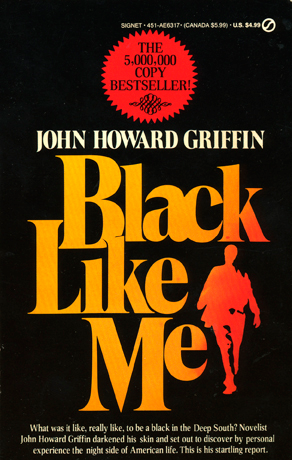

Shannon, who was eight at the time and a very good reader, came to me one day and said, “Mom, I’m worried.”  Concerned I asked, “What about, Shannon?”  “Well,” she replied, First you read Black Child Care and then you read Black Like Me.  I am worried you are going to turn yourself black and me too.”  I slowly said, “Well, Shannon, if I was black, wouldn’t you want to be black too?”  She pondered for a moment and then replied, “Yes, I guess so.”  With that I assured her we were both going to remain white because that is how God made us, but that we should try to understand as best a possible what other races and cultures were like.


As I had to work after school and needed child care, I had made a deal with another ministry student to live with us in exchange for a 25 volume set of commentaries and child care for three months rent.  She was a black girl from Florida and had a brilliant boyfriend from Gayana. Shannon and I lived in a married student housing apartment with two bedrooms so this arrangement worked well for all of us.
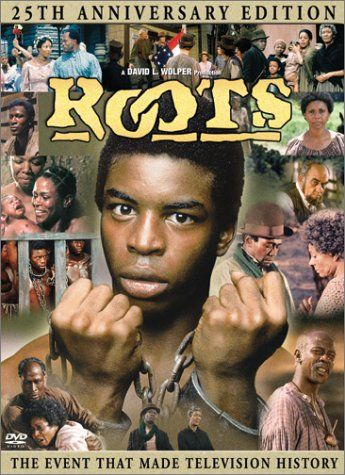

So with this back drop, 1977 was also the release of the TV serial, Roots.  Many friends and students did not have a television and since my house has always been an open house many people crowded into my living room every night to watch this acclaimed show for the week of it’s airing.


Everything went along just fine until the third or fourth night (I can’t recall).  This night there were black students from the Bahamas as well as my roommate and and her boyfriend viewing the show with me and Shannon.  This was the episode that the slave got his foot cut off for running away.


We were intensely into the show when off to the side I could hear my roommates breathing become rapid and labored (she was a asthmatic).  At the point in the movie when the ax was coming down, she jumped to her feet in the middle of my living room, arms flying wildly in the air and yelled out, “I’m beginning to hate these Cracker’s more and more everyday!!”


Everyone was shocked into silence as their eyes turned towards me, the  only Cracker in the room.  All I could say was, “I’m not feeling very good about them either right now.”  Suddenly we all erupted into roaring laughter.  This was not the only time I have been called a Cracker in my life, but it is by far the most memorable.


After my daughter developed her brain tumor two years latter, I gave up my pastorate and was not able to do much ministry, except for those that the Lord brought to me at my house or work.  From my house I have counseled, taught Bible study and prayed for those in need.  In the inter- cities of Seaside, Oakland and Richmond the Lord has brought many people to the my home - “Cracker Lady’s House”
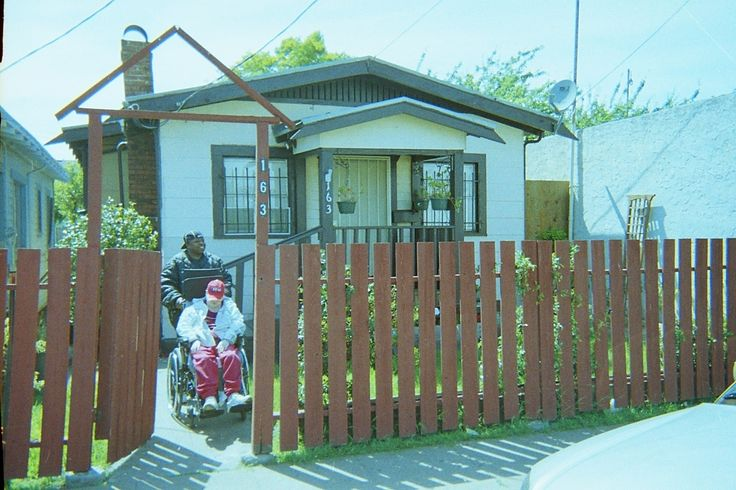
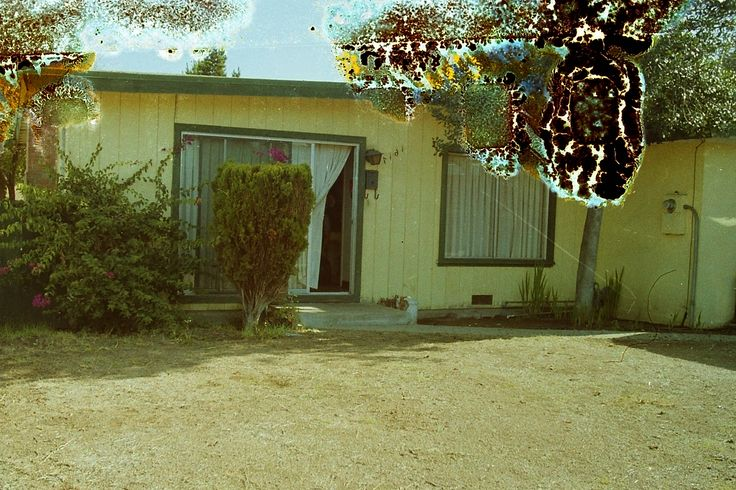
       
Cracker Lady’s Houses in Seaside and Richmond, CA


My Cracker Lady’s House blog was originally to recount some of the extraordinary events during my 30 years of ministry from my house in these inter cities.  Now, however, I use it as a personal blog to write about whatever fits my fancy. Lately, it has been quite autobiographical, but you never know when the winds may change and my writing may take on a different direction.

Tuesday, November 24, 2009

My Richmond Ramblings: S.S. Red Oak Victory

SS Red Oak Victory is a World War II Victory ship preserved as a museum ship in Richmond, California. It was one of 534 Victories built during World War II, but one of only a few of these ships to be transferred from the Merchant Marine to the United States Navy. It was named after Red Oak, Iowa, which suffered a disproportionate number of casualties in early World War II battles. Red Oak is a community firmly rooted with rich traditions of growing industry, embracing worthwhile projects, celebrating history and caring for fellow citizens. Organized in 1869 and named for the numerous oak trees that lined the banks of a small stream known as Red Oak Creek, the Red Oak of today boasts 6,000 residents and is nestled along the Nishnabotna River. The ship was active during World War II, the Korean War, and the Vietnam War.

The Red Oak Victory was built by the Permanente Metals Corporation's Richmond Number 1 Yard in Richmond, California and launched on November 9, 1944. Many Rosies recounted how important their jobs were in welding these ships and how careful they were in doing it. They realized the lives of their husbands; brothers and sons depended on the cargoes delivered by these ships. Victory ships were not supposed to last long--but the welds of the Red Oak Victory are still intact after 60 years. The ship is 455 feet (138 m) in length, and armed with one five-inch/38 caliber gun; one three-inch/50 caliber gun, and eight 20 mm guns.

The ship was acquired by the United States Navy on December 5, 1944 and commissioned the same day as USS Red Oak Victory (AK-235). Following a fitting out period, the Red Oak Victory was loaded with cargo and departed San Francisco for Pearl Harbor on January 10, 1945. Red Oak Victory departed Hawaii on February 10 loaded with munitions needed in the Marshall and Caroline islands. Sent onward from Enewetak, she arrived in Ulithi on February 28, 1945, and then began operating under Commander Service Squadron Ten. Operating out of the Philippines, the vessel issued cargo and ammunition to various ships in the fleet through the end of the war in August 1945. During a hazardous tour of duty in the Pacific, the USS Red Oak Victory handled many tons of ammunition, supplying the fleet without a single casualty.

The vessel was decommissioned in 1946 and returned to the U.S. Maritime Commission. Red Oak Victory was used by the Luckenbach Steamship Company from 1947 through the 1950s, during which time the vessel went to Japan, Korea, Cuba, Pakistan, India, Singapore and Japan again. Red Oak Victory was operated by American Mail Lines for the Military Sea Transport Service from 1966 to 1968, making a dozen voyages to Vietnam, Japan and the Philippines carrying military supplies loaded at West Coast ports. From 1968 until 1998, the vessel was laid up in the National Defense Reserve Fleet in Suisun Bay.

Captain’s Cabin Cartographer's room

Richmond Museum Association

Doomed to be scrapped, the Red Oak Victory came to the attention of the Richmond Museum Association in 1993. In 1996 Congress passed legislation authorizing the conveyance of the ship to the Museum Association. Red Oak Victory was turned over to the Richmond Museum of History and returned to a new home in Richmond on September 20, 1998. It is being restored and operated by the Richmond Museum of History, and is part of the Rosie the Riveter/World War II Home Front National Historical Park.


The Richmond Museum Association has as its mission the preservation and restoration of the SS Red Oak Victory as an operational vessel. The SS Red Oak Victory, a National Memorial
Ship, will be developed into a maritime museum focused on the wartime contributions of the residents and workers of the City of Richmond and the shipbuilding ingenuity of Henry J. Kaiser.

As an operational museum the SS Red Oak Victory will provide a unique perspective on the history-making achievements of the City of Richmond and the Richmond Shipyard workers. As a community resource, the vessel will be a site for local events, service to the children and youth of the community and an intriguing family recreation and entertainment destination. Finally, the SS Red Oak Victory will be a ceremonial ship to recognize and honor those who served with valor in the armed forces, the merchant marine and home-front facilities such as the Kaiser Richmond Shipyards.

The SS Red Oak Victory is the site of many community events such as World War II film festivals; benefits and fundraisers for cultural groups and humanitarian causes; national and veteran ceremonial events; civic, professional and private organization meetings, parties, symposiums, and dinners; weddings and other events


The SS Red Oak Victory also provides services to children of the

community such as Grade school through high school camp and

educational programs (e.g., naval history, mechanical science,

marine engineering, navigation and leadership training); programs

involving sea cadets, boy and girl scout groups, church and other

youth groups; and teacher education, seminars and symposiums


SS Red Oak Victory as a Ceremonial Ship: Supports the activities of the Navy’s Fleet Week and Merchant Marine activities, and conducts special events on National and Patriotic Holidays including the 4th of July, Memorial Day and Veterans Day.


Pancake Breakfast

SS Red Oak Victory www.ssredoakvictory.com

1337 Canal Blvd, Richmond, CA 94804 (510) 237-2933

The SS Red Oak Victory, part of the National Park Service's Rosie the Riveter--World War II Home Front National Historical Park, is located at 1500 Dornan Dr., Terminal One, Point of Richmond, in Richmond. The ship is owned by the non-profit Richmond Museum Association, which is restoring the ship with volunteer help. The ship is open from 11:00am to 4:00pm, Tuesday-Sunday; there is a suggested donation. To schedule a guided tour, please call 510-237-2933.

Monday, February 27, 2006

Radio Club Transmits History

Steve Hawkes, center, listens to Morse code, above, as Charles Jackson, left, Sharon Primbsch and Larry Fitzsimons talk Sunday in Richmond. About 30 members of the Red Oak Victory Amateur Radio Club demonstrated code transmission.

Vintage radio equipment from World War II crackled back to life Sunday as the Red Oak Victory Amateur Radio Club hosted a demonstration of the ship's original radio equipment, which included a Morse code transmission to historical maritime radio station KPH, west of the small Marin County town of Bolinas.

The demonstration was held in addition to regular guided tours of the Victory ship, which was built nearby at Kaiser shipyard number one.

Thursday, October 1, 2009

Richmond Ramblings: Japanese Flower Industry Remembered


Photo by Ken Osborn, Misterken Photography

Beginning in the early 20th century, flower-growing operations founded by Japanese immigrants were common El Cerrito and Richmond as well as in other Bay Area cities. The community in El Cerrito-Richmond grew over time to include 17 nurseries, as well as a Japanese school and church. A second group of nurseries flourished in what is now North Richmond and San Pablo, led by the arrival of the Nabeta family, who began growing roses near Brookside Drive in 1900.

A sizable Japanese American community grew up around the Bay Area as Japanese laborers who had found work with the Domoto brothers’ nursery in Oakland or laying railroad tracks in Richmond moved to the outskirts of established towns to start businesses. They bought or leased land and often used family labor to grow the carnations, chrysanthemums, and roses they would sell in San Francisco.


By Bernadette Talbot, Photographer

with the Berkeley Camera Club

Because a large number of local nursery owners had purchased their land before the passage of the 1913 Alien Land Law, which forbade property ownership to most Japanese as “aliens ineligible for citizenship,” Richmond’s Japanese community was a remarkably stable and long-lived ethnic enclave. Despite forced removal from homes and businesses during

Photo by Ken Osborn,

Misterken Photography

WWII, many of Richmond’s Japanese American nursery owners returned to their neighborhood and revived their businesses. Re-establishing the nurseries took remarkable effort and grinding labor; some families had to literally pick up the pieces as shattered panes of greenhouse glass littered every square foot of their property. A sizable number of Richmond’s nurseries were revived in the years just after the war – the Adachis, Fukushimas, Fujiis, Hondas, Maidas, Mayedas, Nabetas, Ninomiyas, Oishis, Oshimas, Sakais and Sugiharas all returned from camp to reclaim their livelihoods and community in Richmond. They were aided in great part by the tradition of cooperation established at the community’s outset.

Adachi, Sakai, & Oishi Nurseries

Photo courtesy of the Sakai and Oishi families

made available through the Richmond Museum of History

The oldest locally may have been the Adachi nursery, established in 1905 where the Home Depot store in El Cerrito is today.

The Sakai nursery started in 1906 with an initial 2.5 acres in Richmond and a single greenhouse salvaged from Berkeley.

The Oishi nursery started shortly after. Both grew as more land was acquired and more buildings were added, both shut down in 1942 during the World War II relocation of Japanese, and both resumed operations when the families returned after the war. Operations continued until fairly recently.

Ironically, some of the nurseries were displaced in just a few short years as the development of the I-80 freeway cut through the properties in 1948. By the mid-1960s, records indicate that of the original group of nurseries centered on Wall Avenue only the Adachi, Maida, Oishi, Oshima and Sakai families still survived. Of these, only the Oishi and Sakai nurseries operated into the 21st century.

World War II’s Effect on Japanese Nurseries

Aerial view of Sakai nursery, ca. 1945, post-war photo courtesy of the Sakai and Oishi families

made available through the Richmond Museum of History.

The flower trade prospered and even weathered well the Great Depression, but the businesses were closed or taken over by others when Japanese families on the west coast were interned during World War II. Most but not all of the families resumed their nursery trade after the war.

The impact of WWII on Richmond’s Japanese Americans after the attack on Pearl Harbor changed their fortunes through a wartime program of forced removal from their homes, businesses and tightly knit communities. Although not large enough to support the range of local services and organizations that developed in Nihonmachis (Japantowns), Richmond’s cluster of Japanese American nurseries is historically significant as a Nikkei community centered around an industry that was important to this ethnic group and that survived all the way from the initial wave of immigration until the turn of the 21st century.

Despite forced removal from homes and businesses during WWII, many of Richmond’s Japanese American nursery owners returned to their neighborhood and revived their businesses. Re-establishing the nurseries took remarkable effort and grinding labor; some families had to literally pick up the pieces as shattered panes of greenhouse glass littered every square foot of their property. A sizable number of Richmond’s nurseries were revived in the years just after the war – the Adachis, Fukushimas, Fujiis, Hondas, Maidas, Mayedas, Nabetas, Ninomiyas, Oishis, Oshimas, Sakais and Sugiharas all returned from camp to reclaim their livelihoods and community in Richmond. They were aided in great part by the tradition of cooperation established at the community’s outset.

Photo by Ken Osborn,

Misterken Photography

In 1941, some members of these same Japanese-American families were actually part of what became the Home Front, working in the Richmond shipyards, building Liberty Ships to support the allies. After Pearl Harbor, they were shipped off to internment camps, but many volunteered for military service and eventually served with distinction. One of the most poignant stories is how some of their neighbors and former competitors cared for and operated a few of the nurseries in their absence and returned them in good shape after the war.

But other nurseries were abandoned and vandalized. In an ironic twist of fate, wartime leaseholders of many of the nurseries found they could reap greater profits by renting the structures out as temporary housing to shipyard workers.


Photo by Ken Osborn,

Misterken Photography

After the war, the returning internees, some who had become war heroes, struggled to successfully rebuild their businesses. Eventually, competition from low-cost flowers imported from Mexico and parts south made locally grown roses, carnations and other cut flowers uneconomical. One after another, the nurseries shut down and became big box stores and houses. The last of these were the Oishi and Sakai nurseries located near Wall Avenue and South 47th Streets.

Carnations Photo by Ken Osborn, Misterken Photography

Preservation of Nurseries History

Photo by Ken Osborn, Misterken Photography

The Richmond Japanese-American nurseries are historically significant as Nikkei (Japanese immigrant and their American-born descendants) community centered around an industry important to this ethnic group surviving from the initial wave of immigration of the 19th Century into the late 20th Century. The Sakai and Oishi properties are the only extant cut-flower nurseries begun by Japanese-Americans before WW II in the entire Bay Area and are also the last remaining of Richmond’s community of Japanese American flower growers. The properties are rare surviving Bay Area nurseries, a once prominent industry in the core Bay Area counties that has been almost entirely displaced by development pressures during the last thirty years.

Richmond bought the nearly 14-acre site for $7.6 million in June 2006 from the Sakai, Oishi, and Endo families, The former Sakai, Oishi and Maida-Endo nursery properties are now owned by the Richmond Community Redevelopment Agency and slated for residential development in a project the Agency call “Miraflores.” Unfortunately, the evocative name that recalls the property’s historical use has been the Agency’s only recognition of its

Photo by Ken Osborn,

Misterken Photography

history. The Agency would like to simply tear everything down. The Historic Architecture Evaluation, however, makes a modest recommendation of saving one of the homes, the (water) tank house and at least one greenhouse and providing a permanent interpretive exhibit to communicate the history. The historic ensemble could be easily and economically integrated into the new development, giving it more than just a name to recall the site’s historically significant past.

Water Tank Photo by Ken Osborn, Misterken Photography

Saturday, April 18, 2009

No. 844 Steam Train To Roll Through Richmond

Big steam train to roll through Bay Area cities

Living just two blocks from the Richmond Bart & Amtrak Station, I often hear the trains rolling in, particularly at night.  Trains tracts actually make the boarders of my neighborhood, The Iron Triangle.  There a three train tracks that surround my neighborhood, and everything within them is called the Iron Triangle.  I am excited that No. 844, the last steam engine train, will be coming through here soon.

Steam Locomotive No. 844 is the last steam locomotive built for Union Pacific Railroad. It was delivered in 1944. A high-speed passenger engine, it pulled such widely known trains as the Overland Limited, Los Angeles Limited, Portland Rose and Challenger trains.

Hailed as Union Pacific's "Living Legend," the engine is widely known among railroad enthusiasts for its excursion runs, especially over Union Pacific's fabled crossing of Sherman Hill between Cheyenne and Laramie, Wyoming.

The engine has run hundreds of thousands of miles as Union Pacific's ambassador of goodwill. It has made appearances at Expo '74 in Spokane, the 1981 opening of the California State Railroad Museum in Sacramento, the 1984 World's Fair in New Orleans and the 50th Anniversary Celebration of Los Angeles Union Station in 1989.

Rail aficionados will tell you there's something special about a steam locomotive — big wheels, rods pushing back and forth, and belching smoke. Compared with a modern diesel locomotive, steamers are so old-fashioned and dirty "... and alive.

Big, modern Union Pacific stables two large steam engines as rolling goodwill ambassadors and public relations centerpieces. One of them, No. 844, will roll in and out of the Bay Area next week, scheduled to lay over in Oakland on April 21 for public viewing.

The big Cheyenne, Wyo.-based steamer and its train are on their Western Heritage Tour, which began Saturday in Cheyenne before heading west through Utah and Nevada before crossing Donner Pass into California.

An aerial of the Richmond, CA station.  Here, Amtrak riders can reside in a transit-oriented development or transfer to BART (heavy rail) for access into Oakland and San Francisco.

The big engine and its train are scheduled to depart Roseville about 8 a.m. Monday, rolling west on the "Capitol Corridor" route through Fairfield, Martinez, Crockett, Pinole, Richmond and Emeryville, scheduled to arrive in Oakland about 11 a.m.

Ten crew people are devoted to No. 844, when it travels and at its home base. It requires many more than those people to run this operation, though. That's one of the reasons steam engines were replaced by diesels, because the steam was so labor intensive. At every stop on this trip, they have to take on water, and maintain various parts of the engine. (Patsy’s Ponderings by Patsy Terrell Blog, 06.02.06)

Rail fans and others can follow No. 844's progress across the country and in the Bay Area using global positioning, on UP's Web site. And the train's GPS system will provide Twitter transmissions, as well — something as foreign to steam engineers of the 1940s as the computerized diesels that move U.S, freight trains today.

The No. 844 was UP's last new steam engine, built in 1944. It hauled mostly passenger trains until 1957, and spent the last few years of its regular service life pulling freight trains in Nebraska. Far more efficient diesels replaced virtually all U.S. steam engines by the late 1950s, and though several other large steam engines have been restored to service over the years to pull excursions, No. 844 is believed to be the only large steam locomotive in the U.S. that was never retired. It entered special UP service in 1962. (By Sam Richards, Contra Costa Times ,04/13/2009)

Reno, Nevada’s Train Station

No.844 will be passing through the city I was born in Reno, Nevada.  I have taken the ride on a passenger train from Reno to Oakland several times.  It is a beautiful ride through the Sierra Nevada Mountains. Reno is like Richmond, its railway station is right downtown.

Built in 1926 for Southern Pacific and Virginia & Truckee Railroads. Now used by Amtrak. Union Pacific tracks run in a 20-foot deep trench on the other side of the station. 

An Interesting History

Amtrak's Reno station is the fourth train station to stand on that site. The first one, built in 1869, burned down in the Reno fire of 1879. The second one opened a decade later–and it burned down as well.

The third one survived until the station was bought by the Southern Pacific (SP) Railroad in 1925, which replaced that station with the one built in the Mediterranean Revival style popular among SP's holdings. It features a long, stucco-clad building with five tall, rounded arches that form door and window openings. The design is nearly symmetrical and is mirrored on both sides of the station – facing the platform as well as the street. A red tile roof covers the center of the station and its Palladian windows. The station is known for its high, coffered ceiling and the back-to-back wooden benches that are still used by Amtrak passengers.

Along a 2.2-mile stretch in downtown Reno, a $282-million, nine-year project began in November 2005 to lower the Union Pacific mainline and eliminate 11 street crossings in the heart of the city. In January 2006, Amtrak moved back into the both the renovated historic station and a newly constructed section of the historic building. This new space includes a ticket office, a second waiting room in addition to the one in the historic building, offices and a long escalator that leads down to the lowered platform and tracks.

In 2007, the Reno Gazette-Journal newspaper reported a large fountain that once stood in downtown Reno to "quench the thirst of all of God's creatures" went on display in the lower lobby of the rail station. The Women's Christian Temperance Union had the 14-foot-tall fountain built and dedicated it on Oct. 17, 1908, thinking if men had a place to get water for themselves and their horses and dogs, it would keep them out of saloons. Throughout the country, temperance leagues built these grandiose water fountains that doubled as monuments.

The Golden State Model Railroad Museum


Richmond is so centered on trains that it has its own Model Railroad Museum in Point Richmond across the street from the entrance to Miller/Knox Regional Shoreline Park. See map in my Miller/Knox Regional Shoreline & Some Personal Memories Post.  As I child I was fascinated by model railroads.  In Monterey, California, I once ate in a restaurant that had model trains running all around the top of the room.  The food wasn’t bad, but the trains were better.

Located just east of Richmond's rich historical district in the Miller/Knox Regional Shoreline Park, the Golden State Model Railroad Museum boasts one of the largest model railroads in the country at just over 10,000 square feet. I have never be there when it was open.  They have short hours, so check out their web site, http://www.gsmrm.org/ for more information.

The museum features historically correct layouts of Bay Area and Sierra Nevada stations and landmarks

The Tudor style building in the middle of this shot is the Key Route Inn a hotel on the key system that burnt down in the 30s. The Key system was the combination of bus, train and ferry that went from the east bay to the city. This was at the corner of Grand and Telegraph streets in Oakland.

At the Golden State Model Railroad Museum in Richmond. A huge warehouse of different scenes and California towns and rail yards are mocked up.  (Theorem’s photostream, Paul Cloutier, Flickr, July 13, 2008)

10,000 Sq. ft. of model railroad (Devin’s travelogue, Devin Hayes)

LinkWithin

Blog Widget by LinkWithin